
PROVO, Utah — Citing a gap in how the world measures religious persecution, an Adventist religious liberty advocate, Nigel Coke, challenged researchers at Brigham Young University (BYU) to study the financial and mental health impact of religious discrimination on individual families.
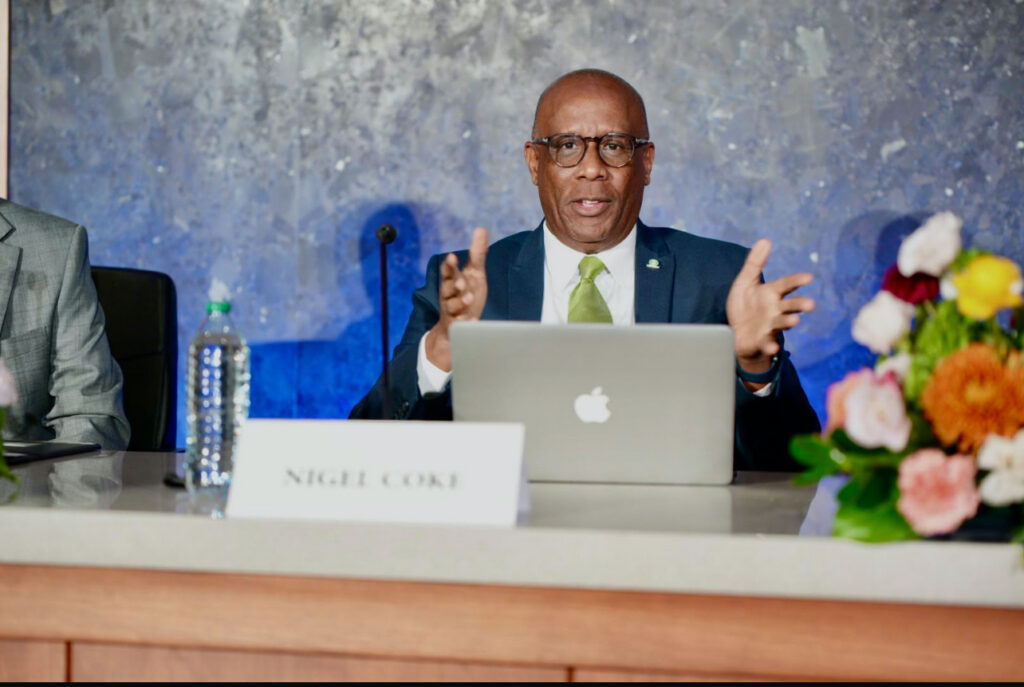
The call was the centerpiece of Coke’s address on interfaith respect and pluralism delivered at BYU, titled “The Architecture of Pluralism: Legal Neutrality and Grassroots Literacy – Why Separation of Church and State Is Necessary but Not Sufficient for Interfaith Respect.”
“Much research may have been done on the spiritual, economic, and social fallout of a country that practices religious discrimination,” said Nigel Coke, former Public Affairs and Religious Liberty Director of the Seventh-day Adventist Church in Jamaica. “But today I challenge the BYU researchers to examine the financial and mental health impact it has on individual families.”
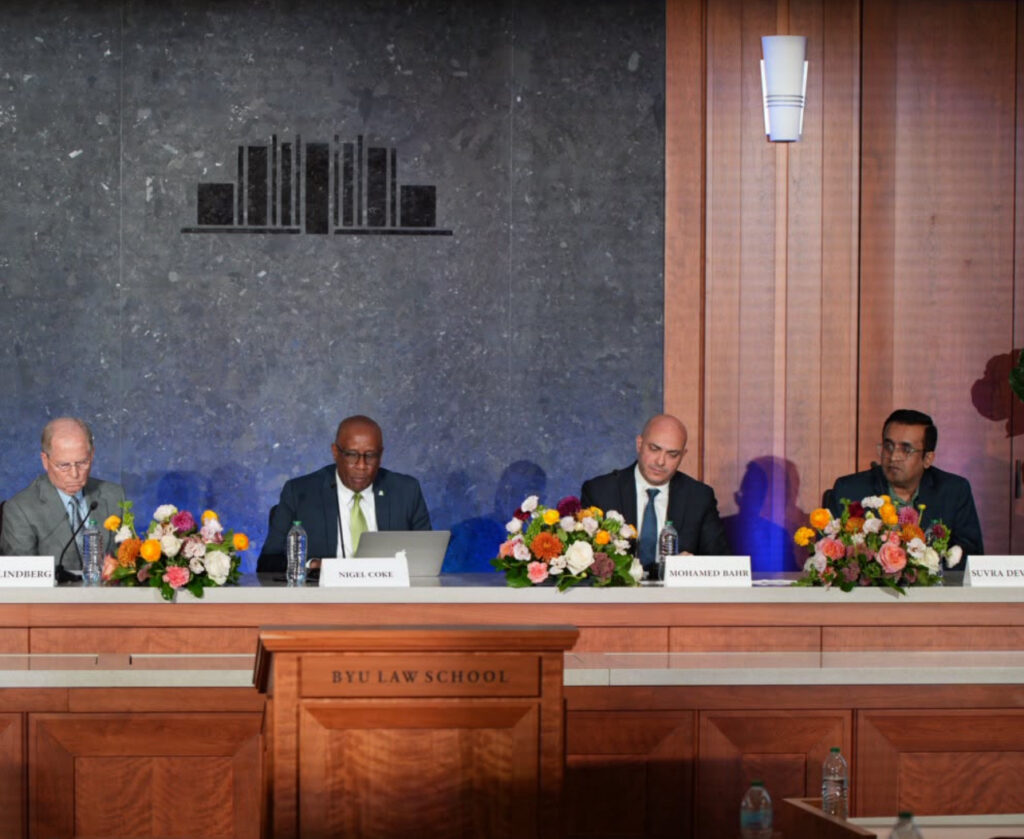
He was speaking at the 33rd Annual International Law and Religious Liberty Symposium organized by BYU from October 4 – 6, 2026, under the theme “Building an Infrastructure for Freedom of Religion or Belief”
Coke, who was the only Jamaican and Seventh-day Adventist among multiple religions in attendance, posited that religious discrimination “has no face; it can affect anyone, regardless of race, class, religion, or ethnicity.” He called for data that goes beyond standard statistics on where persecution exists to document what happens inside households when faith is criminalized or stigmatized. He argued that a father who loses his job due to religious discrimination can have a devastating effect on the family, especially if he is the breadwinner. Effects could range from mortgage holders taking the house his family lives in to possible suicide.
Religious Pluralism Has Two Pillars
Framing the address with Dr. Martin Luther King Jr.’s words from 1963, “Injustice anywhere is a threat to justice everywhere,” Coke stated, “When we tolerate it anywhere — in a constitution that favors one faith and teaches contempt for another — we jeopardize justice everywhere.”
Coke’s presentation outlined pluralism as a building needing two pillars. One is built by lawyers, the other by teachers. Without either, the building collapses.
“Pillar One is legal neutrality, often understood as separation of church and state. When the state acts as guardian of one religion, even culturally, pluralism becomes difficult, and inequality dominates,” Coke argued.
“The state cannot be both a player and a referee; separation does not mean hostility toward religion. It means the state creates a neutral space where no religion needs permission from another to exist.”
Without that neutral space, interfaith dialogue “becomes theater,” Coke said. “We shake hands on stage while the law off stage has already chosen a winner,” he explained.
Pillar Two, Coke said, is grassroots literacy — and where current interfaith work is failing. While interfaith education that brings different faiths together is valuable, what is more urgently needed is intra-faith education for interfaith respect.
“Intra-faith means let me teach my members what our own religion says about how we must treat you when we believe you are wrong.”
He said, “Somewhere in our global sphere, Christians, Adventists, Muslims, Hindus, and Rastafari live on the same street. The problem is not that they don’t know each other exists; it is what they were taught on their day of worship about that existence.”
Coke warned that children may leave Sabbath School, Sunday School, or Madrasa with two lessons: “We are right, and therefore they deserve our contempt,” adding that the second lesson was not in our holy texts but was added.
Three corrections were proposed: first, separate disagreement from disrespect; second, teach each tradition’s own texts on respect for neighbor and stranger as doctrine, not an optional extra; and third, stop teaching caricatures of other faiths.
Drawing on Seventh-day Adventist teaching, Coke noted that the church upholds religious freedom for all, that “God accepts only homage that is freely given,” and that the law must be applied evenly.
Coke’s address concluded with a dual call for lawmakers to be neutral in that the state must not be a theologian. It must be a guardian of space, and that pastors, imams, rabbis, priests, and teachers should be faithful in their teachings, but also teach what their own faith commands about how to treat those they believe are false.
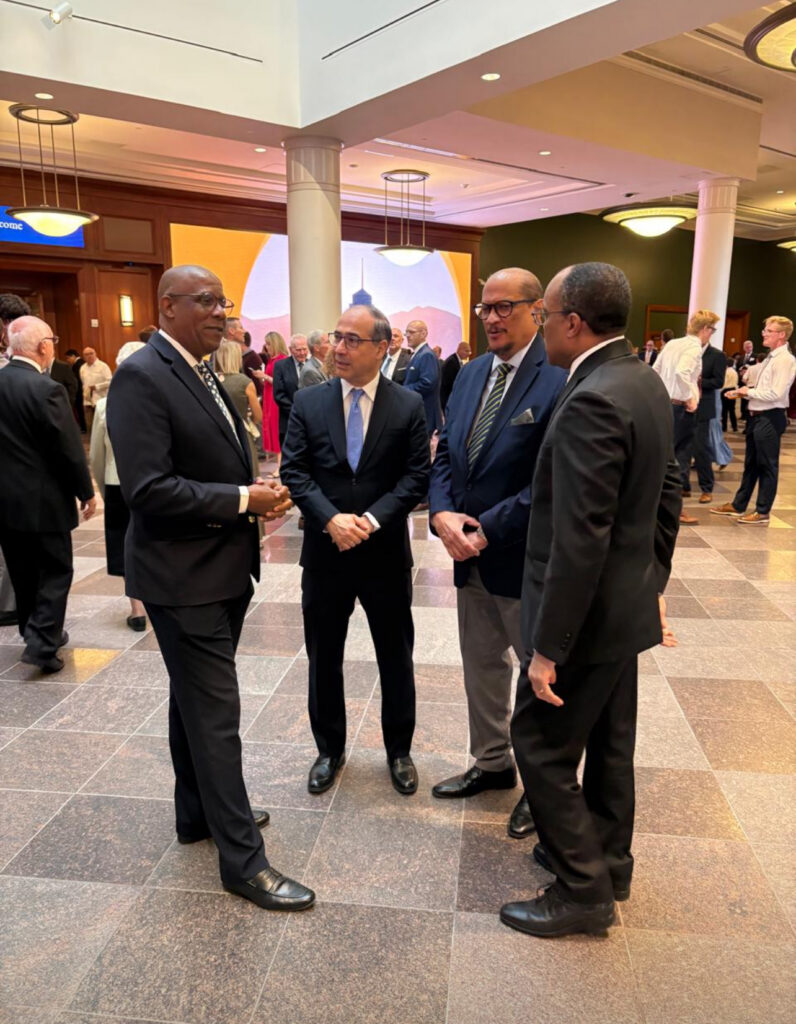
The symposium brought together more than 200 attendees from over 50 countries across Europe, Asia, the Middle East, Africa, the Pacific, North and South America, the United States, and the Caribbean. Attendees include religious liberty experts, scholars, the legal fraternity, religious leaders, public and government officials, and advocates.